
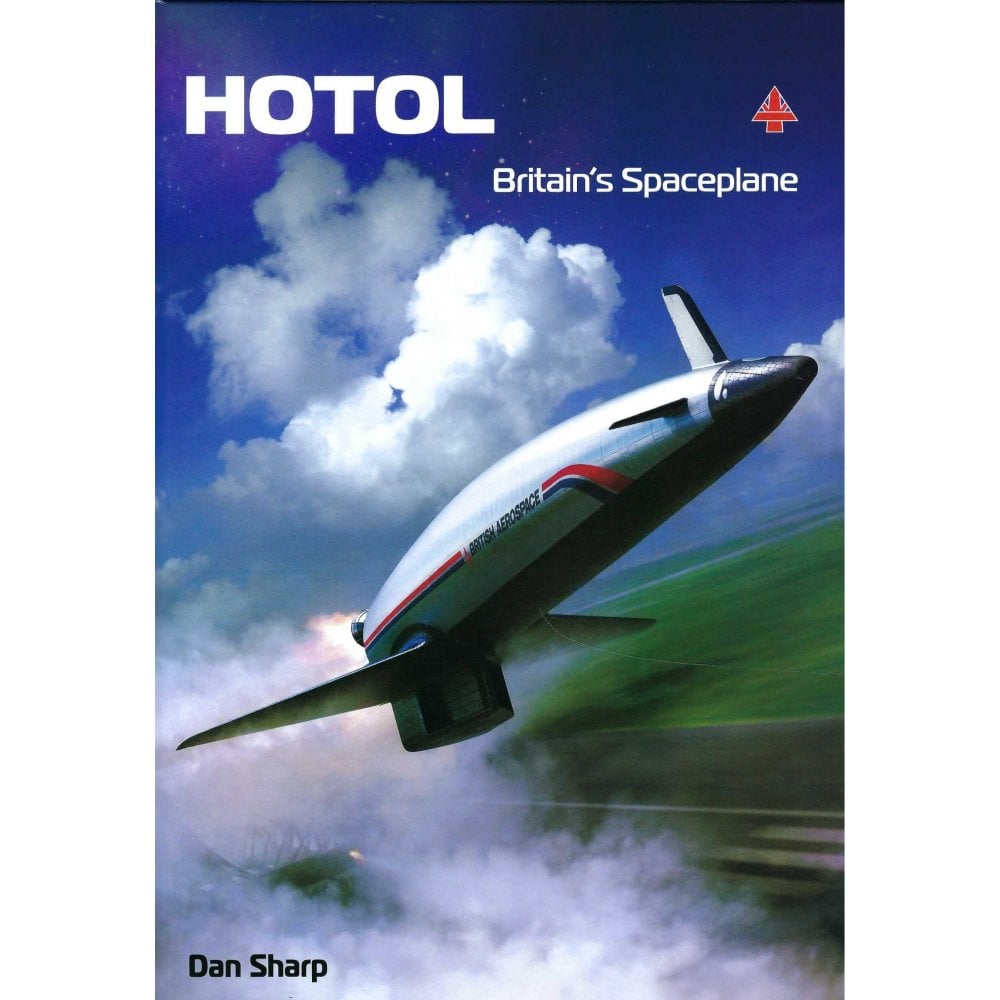
The concept was deceptively simple – a vehicle able to take off from a conventional runway using airbreathing engines, switch to pure rocket propulsion at high altitude, fly up into space, complete its mission, then fly back down and land. Bond and Parkinson believed it could be done and HOTOL – Horizontal Take-Off and Landing – was born. By 1983 both British Aerospace and Rolls-Royce were backing the project. A broadcast on ITN’s New at Ten in 1984 made HOTOL famous overnight, with the whole nation now aware of its existence. The Government agreed to match-fund the companies’ financial commitment in 1985 and the work ramped up into high gear, with some of Britain’s best engineers engaged in making this remarkable vehicle a reality. Two years later, Minister of State of Trade and Industry Kenneth Clarke withdrew funding – signalling the beginning of the end of HOTOL, though there were attempts to revive it as an air-launched vehicle atop an Antonov An-225 as Interim HOTOL.
HOTOL: Britain’s Spaceplane by Dan Sharp covers the full story of HOTOL’s development in detail from beginning to end, drawing on the BAE Systems archive, the personal archives of the project’s creators and extensive interviews with those involved. It includes new artwork plus hundreds of contemporary diagrams and illustrations, ranging from full colour brochures and publicity material – both used and unused – to previously unseen diagrams and schematics of HOTOL’s numerous configurations.

